

True Luck Casino sets deposit, withdrawal, wager, and session limits on each new account https://trueluckcasinologin.com/login/. These limits comply with Dutch gambling rules, minimize fraud risk, and provide players clear boundaries on daily, weekly, or monthly activity. Knowing the exact numbers, the verification steps that activate higher limits, and the process for modifying limits assists steer clear of surprises. This guide covers the account journey from registration through regular use, featuring the requirements, time frames, and issues players face when they initially open and verify a True Luck Casino profile.
Who Is Eligible for an Account at True Luck Casino
Only people who are at least eighteen years old and are based in the Netherlands can sign up. The form asks for official full name, date of birth, current residential address, and a valid Dutch mobile number. True Luck Casino validates this data against public records; any mismatch blocks the account before it becomes active. Players must also certify they are not politically exposed persons and that their deposit funds derive from legal sources. Because the operator possesses a licence from the Dutch Kansspelautoriteit, it cannot admit applicants who live outside the Netherlands or who already are listed in the national Cruks self-exclusion register. Applicants who satisfy these criteria are sent an automated email with a verification link that must be used within 24 hours.
Setting Up the Account: Mandatory Fields and Initial Limits
The sign-up page presents a single form that collects the details listed above plus a chosen username and password. After submission, the account activates with the lowest deposit and wagering limits allowed under Dutch rules. At this stage a player can add up to €10 per transaction and €50 per day, and can set no more than €100 in total bets within any 24-hour period. These starter limits remain active until identity documents are uploaded and reviewed. The system displays the current limits on the account dashboard, and any attempt to exceed them triggers an on-screen message that clarifies the restriction and the steps needed to raise it.
Deposit and Withdrawal Caps Post-Verification
Once verified, players can see a chart of present limits inside the cashier area. Per-day deposit limits span from €500 to €5 000, per-week limits from €2 000 to €20 000, and per-month limits from €5 000 to €50 000, based on the chosen payment option and the member’s transaction background. Credit-card deposits are restricted to €2 000 per operation, while iDEAL and Bancontact allow up to €5 000 per transaction. Cash-out limits start at €5 000 per calendar month and can be boosted in €5 000 steps after a written application and an further source-of-funds review. Every increase necessitates at least 30 days of account operations and a lowest deposit-to-withdrawal proportion of 1:1. All withdrawal requests are dealt with within three banking days once approved; the precise arrival time depends on the target bank.
Modifying or Canceling Limits
Players who desire to adjust any limit must file a request through the responsible-play section of the account menu. The request form requests the new limit value, the justification for the change, and an electronic signature. Applications to decrease a limit take effect immediately. Submissions to raise a limit trigger an additional compliance review that reviews the player’s deposit history, withdrawal patterns, and any previous limit changes. The review normally ends within five working days. Dutch regulations mandate that any increase be communicated in writing and that the player confirm understanding of the new exposure. Limits cannot be raised more than once every 30 days, and any account that has been self-excluded or has triggered a responsible-gaming alert within the previous six months is automatically prohibited from requesting increases.
Two-Factor Authentication and Regular Security Checks
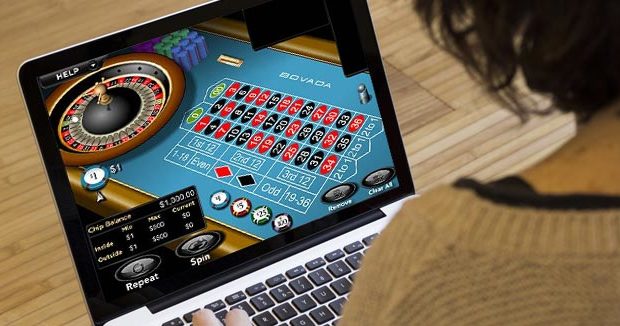
After the primary successful login, the system prompts the player to turn on two-factor authentication (2FA). The only offered method is a time-based one-time password generated by an authenticator app such as Google Authenticator or Authy. Once 2FA is enabled, every login and every withdrawal request above €100 demands the six-digit code. The platform logs the IP address, device fingerprint, and approximate location of each login. If a login comes from a country outside the Netherlands or from a previously unseen device, an additional verification step appears that requests the player to confirm the attempt via email before access is granted. Players who lose access to their authenticator app must contact support and complete an identity quiz before a new 2FA seed can be released.
Password Recovery and Account Lockouts
A forgotten password can be reset from the login page by providing the registered email address. The system sends a one-time link that expires after one hour. If the link is not activated within that window, a new request must be sent. After five consecutive failed login attempts the account is temporarily locked for fifteen minutes; repeated lockouts within a 24-hour period lengthen the lock to four hours. Players who think their account has been breached are encouraged to initiate the lock themselves through the “Lock account” button in settings, then notify support to review recent activity logs. Support can provide a list of the last ten IP addresses that logged into the account and the exact times of each login.
Account Verification and Document Upload
To increase limits, players must finish a standard identity verification. The required documents are a clear photo or scan of a government-issued photo ID (Dutch passport, identity card, or full driver’s license) and a recent proof-of-address document dated within the last three months. Acceptable proof-of-address items include a utility bill, local tax bill, or bank statement that lists the player’s full name and Netherlands home address. Documents must be in colour, show all four corners of each page, and feature legible text. Files are sent through the account settings page; each file must be under 5 MB and in PNG, JPG, or PDF format. Once uploaded, the compliance team normally completes manual review within two working days. stap voor stap
Typical Review Outcomes and What Happens Next
Accepted
When the documents correspond to the registration data, the account status changes to “Verified” and an email notifies that deposit and withdrawal limits have been upgraded to the next tier. Players can then add funds up to €500 per transaction and €2 000 per day, while withdrawal limits begin at €5 000 per month. The same email outlines the new limits and clarifies how to apply for further increases if needed.
Not Approved or Missing
If a document is blurry, expired, or does not correspond to the registered address, the system rejects it with a short note of the problem. Players may submit new corrected files immediately; each new submission begins again the two-working-day review clock. Accounts that stay unverified after three attempts are noted for manual support intervention, which may involve a video call to establish identity.
Playing session and Wagering Limits
Alongside financial limits, the platform imposes session-time and wagering caps. A single gaming session must not exceed six consecutive hours; after five hours and forty-five minutes a pop-up warning appears and the session terminates automatically at the six-hour mark. Wagering limits are expressed as total stake amounts as opposed to number of bets. The default verified limit is €10 000 per day and €50 000 per month across all game types. Players are allowed to request a lower personal limit, which cannot be raised again for 24 hours. These limits are separate from deposit limits, so it is achievable to have a high deposit ceiling but a deliberately low wagering ceiling for harm-reduction reasons.
Typical Problems and Ways to Fix Them
Customers most often encounter three problems: document rejection, delayed withdrawals, and 2FA lockouts. Document rejection is usually caused by cropped edges, glare on the photo ID, or an address mismatch; re-scanning under bright, even light and ensuring the address document is dated within 90 days fixes the majority of cases. Delayed withdrawals frequently result from an incomplete source-of-funds declaration; attaching the last three months of bank statements that clearly show the origin of deposited funds lifts the hold. 2FA lockouts occur when the authenticator app is reinstalled without first exporting the seed; contacting support with a government-issued selfie video that shows the player holding their ID next to their face restores access within one working day. Keeping digital copies of all uploaded documents and noting the exact date of each verification step cuts the time needed to fix any of these issues.
Leave a Reply